

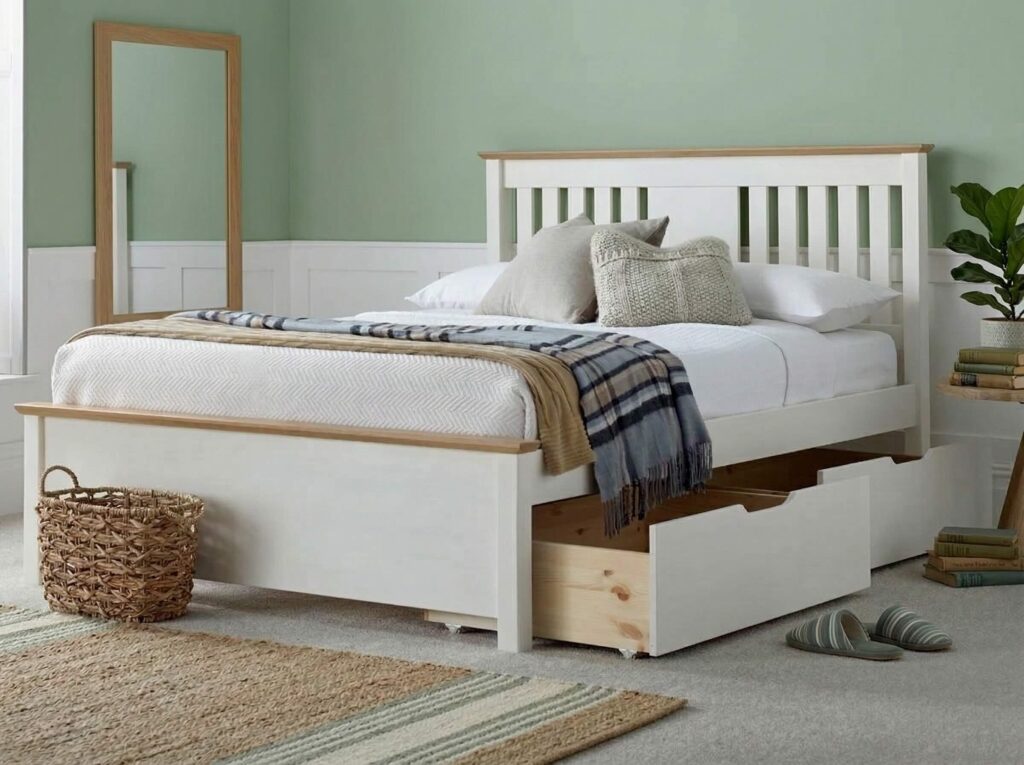
Your bedroom should be your own personal sanctuary – a space where you can escape from the outside world and enjoy the perfect night’s sleep. So why not create a bedroom that supports both your wellbeing and the planet?
You spend about a third of your life sleeping, which makes your bedroom one of the most important spaces in your home. Green bedroom ideas offer the perfect way to design a tranquil, eco-conscious retreat that reduces your carbon footprint whilst helping you rest better.
The benefits go far beyond just being kind to the environment. Sustainable choices improve the air quality in your room and help you avoid harmful chemicals that could be affecting your sleep without you even realising it.
Whether you’re drawn to sage green bedroom ideas, light green bedroom ideas, or modern green bedroom ideas for adults, these eco-friendly choices create a more harmonious space where you can truly unwind.
Ready to create your perfect green sleep space? We’ll show you everything from sustainable bedding and ethical furniture choices to energy-efficient design ideas that will help you sleep better whilst caring for the planet.
What makes a bedroom truly sustainable?
Creating a truly sustainable bedroom means much more than choosing a few organic products or adding a splash of green paint to your walls. The most effective eco-friendly spaces follow five core principles: waste reduction, energy efficiency, health promotion, low carbon footprint, and timeless design.
These guidelines help you create a bedroom that stays functional and stylish for years without needing constant updates.
The materials around you matter more than you think
Your bedroom environment affects you in ways that go far beyond simple comfort. During those crucial eight hours of sleep, the materials surrounding you directly impact your wellbeing.
Synthetic bedding and furniture often contain volatile organic compounds (VOCs), which release harmful chemicals into your sleeping space. These substances are linked to serious health concerns including hormonal disruptions, neurological effects, immune system suppression, and increased cancer risk.
Natural materials offer a much healthier alternative. Wool, cotton, and latex are naturally hypoallergenic and resistant to dust mites and common allergens. Natural fibres like wool adjust to your body temperature, ensuring comfortable sleep regardless of the season.
Organic materials also allow your skin to breathe properly, creating a fresher sleeping environment.
Why better sleep leads to better choices
Quality sleep significantly affects your mental, emotional, and physical health, which shapes the sustainable choices you make during the day. When you enjoy better rest, you’re more likely to engage in mindful, eco-friendly behaviours throughout your waking hours.
High-quality natural furnishings typically outlast cheaper synthetic options, meaning less waste over time and fewer products ending up in landfills.
Light green bedroom ideas that help you sleep better
Green bedroom ideas have an especially calming effect on your nervous system. Adding green elements like artwork, cushions, or bedspreads can help signal to your brain that it’s time to wind down.
Soft shades such as sage or mint on walls or in bedding promote relaxation and improve sleep quality. The association with nature helps lower heart rates and blood pressure, reducing stress and anxiety before bedtime. This calming effect also helps you wake up feeling more refreshed and positive.
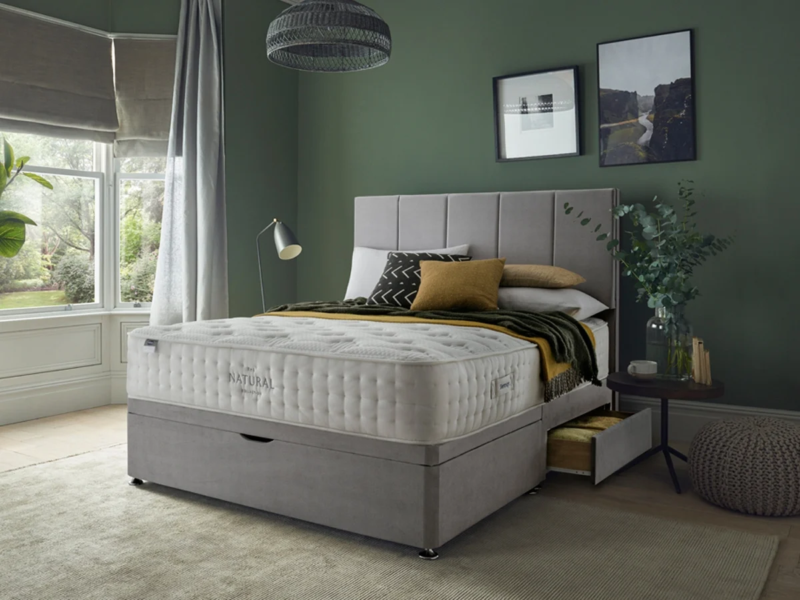
Pictured: Silentnight Puriel Natural 1400 4FT 6 Double Divan Bed
What should you choose for your bedroom essentials?
Your mattress and bedding form the foundation of any green bedroom. These are the items that have the most direct contact with your skin for extended periods, so material selection matters for both your health and the environment.
How to select organic mattresses free from harmful chemicals
Organic mattresses use certified materials including natural wool, latex, and cotton to avoid harmful substances that may disrupt hormones, affect the nervous system, and impair immune function. Here’s what you need to know: despite widespread marketing claims, fewer than 2% of mattresses actually receive genuine organic certifications.
When shopping, look for GOTS certification, which audits every step from raw materials to manufacturing and explicitly prohibits polyurethane foam, memory foam, chemical flame retardants, and fibreglass. GOLS certification ensures latex contains at least 95% organic content.
Takeaway Tip: Additional certifications like MADE SAFE screen against over 6,500 harmful substances, whilst GREENGUARD Gold tests for VOCs and formaldehyde emissions.
Choose sustainable bedding made from natural fibres
Organic cotton remains the most popular choice, offering softness and breathability when GOTS-certified. But don’t overlook these alternatives:
Hemp presents exceptional sustainability credentials, growing with minimal water, zero pesticides, and naturally purifying soil whilst capturing carbon dioxide. Its long fibres create naturally breathable, temperature-regulating bedding with antibacterial properties.
Linen provides excellent durability and a relaxed aesthetic whilst requiring less water than cotton.
What you’ll need for eco-friendly pillows and mattress toppers
- Natural latex pillows filled with Talalay latex offer buoyant support combined with organic cotton covers and wool layers for temperature regulation
- Wool-filled options provide hypoallergenic, moisture-wicking comfort
- Organic cotton batting suits those preferring softer support
For toppers, natural latex delivers durable, biodegradable support, coconut coir offers firm, breathable backing, and wool provides temperature-regulating cushioning.
Don’t forget about ethical and sustainable nightwear
Sleepwear deserves attention since your body releases sweat during sleep, which can draw out toxic dyes and finishes from synthetic fabrics. Organic cotton pyjamas certified under GOTS ensure chemical-free production with fair labour practises. Bamboo and Tencel offer moisture-wicking alternatives, whilst hemp and linen provide natural durability and breathability.
What makes the perfect eco-friendly bedroom space?
Once you’ve sorted your sleep essentials, it’s time to focus on the space itself. Your furniture, wall colours, lighting, and flooring all play a part in creating an eco-friendly bedroom that looks amazing and supports the planet.
How do you find furniture that’s both stylish and sustainable?
Reclaimed wood furniture brings distinctive character that new pieces simply can’t match. Each item features unique grain patterns, weathered textures, and authentic markings that tell the story of the timber’s previous life.
Beyond looking fantastic, reclaimed timber often surpasses new wood in durability, having already weathered decades of natural seasoning that makes it incredibly stable and resistant to warping. You’re also reducing deforestation whilst diverting quality timber from landfills.
Can’t find the perfect reclaimed piece? Look for FSC-certified wood when buying new furniture, which ensures responsible forest management.
Which paint colours work best for sage green bedroom ideas?
Sage green remains a versatile choice for bedroom walls, offering a muted, greyish-green hue reminiscent of the sage plant. But here’s what really matters – choose water-based eco-friendly paints with virtually zero VOC content to eliminate respiratory issues and unpleasant odours.
Little Greene’s Absolute Matt Emulsion contains 40% recycled content and meets child-safe certification standards EN 71-3: 2019, making it perfect for any bedroom application.
What lighting choices will save you money and energy?
LED bulbs use 80% less electricity than halogen lights and last up to 20 times longer. Simply switching off lights when leaving rooms could save you around £8 yearly.
For window treatments, blackout curtains provide insulation that keeps rooms cooler in summer and warmer in winter, cutting your energy consumption. Choose options with OEKO-TEX certification to ensure harmful substances are limited, and opt for natural fabrics like organic cotton or linen.
Which flooring options offer the best sustainability?
Bamboo flooring regenerates in just 3-5 years compared to 50+ years for hardwood. Strand-woven varieties offer exceptional durability, proving harder than oak.
Cork presents another brilliant renewable option, harvested from bark without harming trees every 9-12 years, with individual trees producing for 200+ years. Cork provides natural thermal insulation, antimicrobial properties, and comfortable cushioning underfoot.
For rugs, seek natural fibres like wool, jute, sisal, or organic cotton with GOTS or OEKO-TEX certifications.
Can houseplants really improve your bedroom air quality?
Certain houseplants can assist with air quality, though you’d need substantial quantities for significant effects. A 1989 NASA study identified peace lily, snake plants, and spider plants as effective at removing toxins like formaldehyde and benzene.
Snake plants remove nearly all tested toxins, whilst spider plants reproduce readily, allowing you to grow multiple plants affordably.
Takeaway Tip: Start with one or two snake plants and let spider plants multiply naturally to create your own indoor air-purifying system.
Keep your green bedroom working for you
Your sustainable sanctuary doesn’t end with choosing the right mattress and paint. Daily habits make all the difference in keeping your green bedroom ideas truly eco-friendly for years to come.
Make your own cleaning solutions
You don’t need harsh chemicals to keep your bedroom sparkling clean. Simple homemade solutions work just as well whilst protecting your indoor air quality. White vinegar mixed equally with water creates an effective all-purpose spray, whilst baking soda combined with lemon juice tackles stubborn marks.
When you do buy ready-made products, look for third-party certifications from EWG, Green Seal, or UL Ecologo to avoid greenwashing.
Smart habits that cut your energy bills
Small changes add up to significant savings. Switching off appliances at the plug saves approximately £45 annually. Setting your thermostat to 65°F before bedtime improves sleep quality whilst conserving energy.
Takeaway Tip: lowering your temperature by just one degree can reduce heating bills by around 10%.
Stop heat escaping from your room
Poor insulation wastes money and energy. Uninsulated homes lose roughly 25% of heat through the roof, 35% through walls, and 15% through floors. Draught-proofing windows and doors can save around £85 yearly, whilst thermal curtains provide insulation against temperature fluctuations.
Make sure your loft insulation measures at least 300mm deep to prevent heat escaping.
Give old furniture new life
Secondhand furniture extends product lifespan whilst reducing manufacturing emissions. Vintage pieces add character to modern green bedroom ideas for adults without the environmental costs of new purchases.
Your bedroom will have more personality, and you’ll spend less money creating a space that’s uniquely yours.
Sleep better, live greener
Creating your eco-friendly sleep space doesn’t happen overnight, and that’s perfectly fine. Each small change you make – whether it’s swapping to organic cotton sheets or choosing reclaimed wood furniture – brings you closer to a bedroom that truly supports both your wellbeing and the planet.
The beauty of green bedroom ideas lies in their flexibility. You might start with natural cleaning products this weekend, add some air-purifying plants next month, or save up for that organic mattress you’ve been eyeing. There’s no right or wrong way to begin your journey towards a more sustainable sleep space.
Remember, even the smallest changes can make a difference. That LED bulb you switch on tonight will use 80% less energy than a halogen alternative. The organic pillow you rest your head on protects you from harmful chemicals whilst supporting ethical manufacturing practices.
Don’t feel pressured to change everything at once. Pick one area that appeals to you most and start there. Your future self – and the planet – will thank you for taking that first step towards creating a bedroom that’s truly worth shouting about.
FAQs
Q1. What are the main principles of creating a sustainable bedroom? A truly sustainable bedroom follows five core principles: waste reduction, energy efficiency, health promotion, low carbon footprint, and timeless design. These guidelines help create a functional and stylish space that lasts for years without requiring frequent updates, whilst minimising environmental impact and supporting your wellbeing.
Q2. How do organic mattresses differ from conventional ones? Organic mattresses use certified natural materials like wool, latex, and cotton to avoid harmful substances that may disrupt hormones and affect the nervous system. Look for GOTS certification, which prohibits polyurethane foam, memory foam, chemical flame retardants, and fibreglass. Fewer than 2% of mattresses actually receive genuine organic certifications despite widespread marketing claims.
Q3. Why should I choose natural fibres for bedding? Natural fibres like organic cotton, hemp, and linen are hypoallergenic, resistant to dust mites, and allow your skin to breathe properly. They adjust to your body temperature for comfortable sleep year-round, unlike synthetic materials which can contain volatile organic compounds (VOCs) that release harmful chemicals into your sleeping space.
Q4. How much energy can I save by switching to LED bulbs in my bedroom? LED bulbs use 80% less electricity than halogen lights and last up to 20 times longer. They consume up to 90% less energy than traditional bulbs whilst providing the same level of illumination. Additionally, switching off lights when leaving rooms can save around £8 yearly.
Q5. What’s the most effective way to reduce heat loss in a bedroom? Uninsulated homes lose approximately 25% of heat through the roof, 35% through walls, and 15% through floors. Draught-proofing windows and doors can save around £85 annually, whilst ensuring loft insulation measures at least 300mm deep prevents heat escaping. Thermal curtains also provide excellent insulation against temperature fluctuations.